Alternatives to Brushing Cats Teeth: 7 Honest Options Ranked by Effectiveness
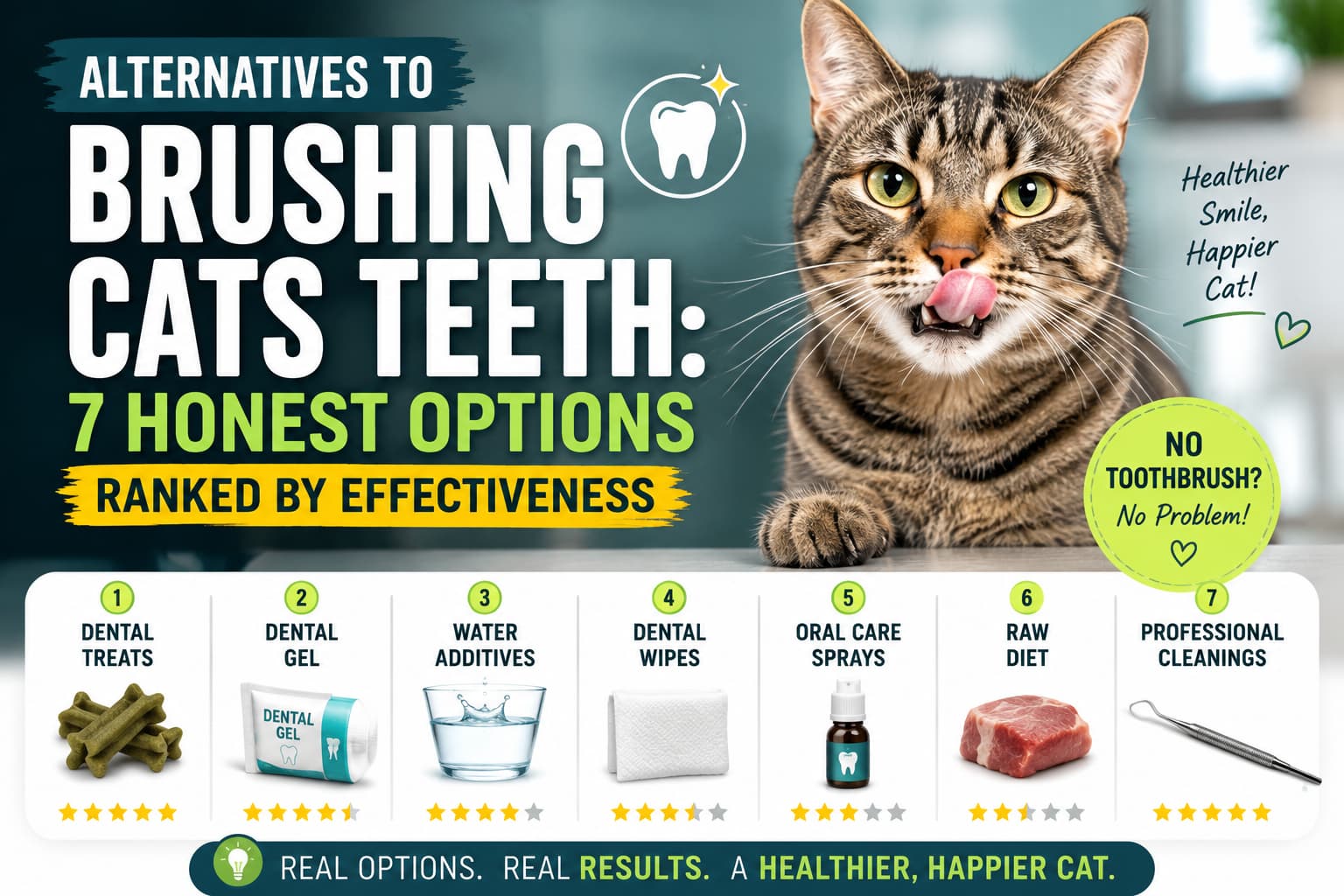
I’ll be direct: nothing replaces brushing your cat’s teeth. The mechanical action of bristles against tooth surfaces is the most effective at-home method for removing plaque, and no product or approach matches it when done consistently. But most cat owners know this and still don’t do it — because most cats don’t tolerate it.
Alternatives to brushing cats teeth exist, work to varying degrees, and are significantly better than nothing. This post ranks them honestly by effectiveness rather than just listing them all equally.
Dental disease affects the majority of cats by age three. Professional dental cleanings under anesthesia are the only way to address tartar that has already mineralized — home care prevents future buildup but cannot remove existing calculus. Discuss your cat’s dental health with your vet annually.
Why cat dental care matters more than most owners realize
Dental disease in cats is the most common health condition seen in veterinary practice. By age 3, an estimated 70% of cats show signs of dental disease. Left untreated, dental disease progresses to periodontal disease — infection that spreads from the gum tissue to the tooth root, into the jaw bone, and in severe cases, into the bloodstream where it can affect the heart, kidneys, and liver.
Alternatives to brushing cats teeth matter because the cost and health impact of untreated dental disease is significant — and most owners don’t brush consistently enough for brushing to be the reliable primary prevention.
Alternatives to brushing cats teeth: 7 honest options ranked
1. Dental water additives — easiest, reasonable evidence
Water additives are the most owner-friendly dental approach. Add the specified amount to the cat’s water bowl daily. The additive reduces bacteria in the oral cavity and inhibits plaque formation.
Effectiveness: Moderate. A clinical study found meaningful tartar reduction over 84 days with a water additive alone. Won’t substitute for brushing but produces measurable results with zero effort.
Best option: Oxyfresh Pet Dental Water Additive — flavor-free (cats refuse flavored additives), veterinarian-recommended, contains Oxygene which targets plaque bacteria specifically.
Caution: Must be completely flavorless or the cat will stop drinking. Test with a small amount first.
2. Enzymatic dental gels — good option for cats that tolerate handling
Enzymatic gels are applied to the teeth and gums using a finger or soft cloth. The enzymes break down plaque and inhibit bacterial growth. No brushing action required — just contact.
Effectiveness: Good for plaque prevention, better than water additives for targeted application. Less effective than brushing because there’s no mechanical abrasion.
Best options: TropiClean No Brush Dental Gel for Cats, Vetri-Science Perio Plus Feline Dental Gel.
Best for: Cats that tolerate gentle mouth touching but resist a toothbrush.
3. Dental treats with VOHC seal — useful supplement
Dental treats work by the mechanical action of chewing — the treat’s texture scrapes tooth surfaces as the cat chews. Some contain enzymes or antimicrobial ingredients as well.
Effectiveness: Modest for plaque and tartar reduction. Most effective for teeth the cat chews with — back teeth — less effective for canines and front teeth.
Important: Only look for treats with the Veterinary Oral Health Council (VOHC) seal of acceptance. This seal indicates the product has been tested and shown to reduce plaque or tartar in cats. Many “dental” treats make marketing claims without this verification.
Best options: Greenies Feline Dental Treats (VOHC accepted), Purina DentaLife.
4. Dental diets — best suited as daily nutrition for dental-prone cats
Prescription dental diets (Hill’s Prescription Diet t/d, Royal Canin Dental) are formulated with enlarged kibble and specific fiber structures that mechanically clean teeth as the cat chews. They require more chewing than standard kibble, increasing the cleaning contact time.
Effectiveness: Good for cats that actually chew kibble rather than swallowing whole. Clinical evidence supports tartar reduction comparable to brushing in cats that tolerate the diet.
Limitation: Requires full dietary switch; not suitable as an add-on. Discuss with your vet before changing a cat’s primary diet.
5. Dental wipes — better than nothing, easier than brushing
Dental wipes are textured pads that wrap around your finger to wipe tooth surfaces. They provide mild mechanical action and often contain antimicrobial ingredients.
Effectiveness: Better than water additives alone, not as good as brushing. The mechanical element distinguishes them from gel-only products.
Best for: Cats that won’t tolerate a toothbrush but accept finger handling in the mouth.
6. Dental toys and chews — lowest effectiveness, still valuable
Rubber or rope dental toys and approved chews provide some mechanical cleaning benefit through play and chewing. The evidence base is weaker than for other options, and most cats engage with them inconsistently.
Effectiveness: Low as primary prevention; useful as supplement to other approaches.
Note: Some rawhide products marketed for dogs are inappropriate for cats. Stick to products specifically designed for cats.
7. Attempting to reintroduce tooth brushing — worth trying again
If you’ve tried and failed to brush your cat’s teeth, it’s worth trying the gradual desensitization approach before giving up:
- Week 1: touch lips and muzzle gently while providing treats — nothing more
- Week 2: lift lips briefly, touch tooth surfaces with a finger
- Week 3: introduce finger brush with a small amount of flavored cat toothpaste
- Week 4+: short brushing sessions with a soft-bristled toothbrush
The goal is to make each incremental step feel normal before progressing. Cats that were rushed to a toothbrush before they were comfortable often become brush-resistant permanently — slow reintroduction can recover ground.
The honest combination that works for most cat owners
Most cat owners who want to do something practical without investing significant time and money do best with:
- Daily water additive (Oxyfresh)
- VOHC-certified dental treats 3–4x weekly
- Annual professional dental cleaning under anesthesia (the only way to remove mineralized tartar)
This combination, sustained consistently, prevents significant dental disease buildup between professional cleanings.
For more on cat health and care, see our guides on how to prevent cat hairballs, alternative shampoo for cats, and complete cat behavior guide. The Cornell Feline Health Center dental care and VCA guide to cat dental disease are both excellent further references.
Michael Burrows has owned cats his entire life and writes about feline health from personal experience and research. Always consult your vet for specific dental care advice.