Why Do Cats Lay on Their Back? 8 Surprising Reasons Explained
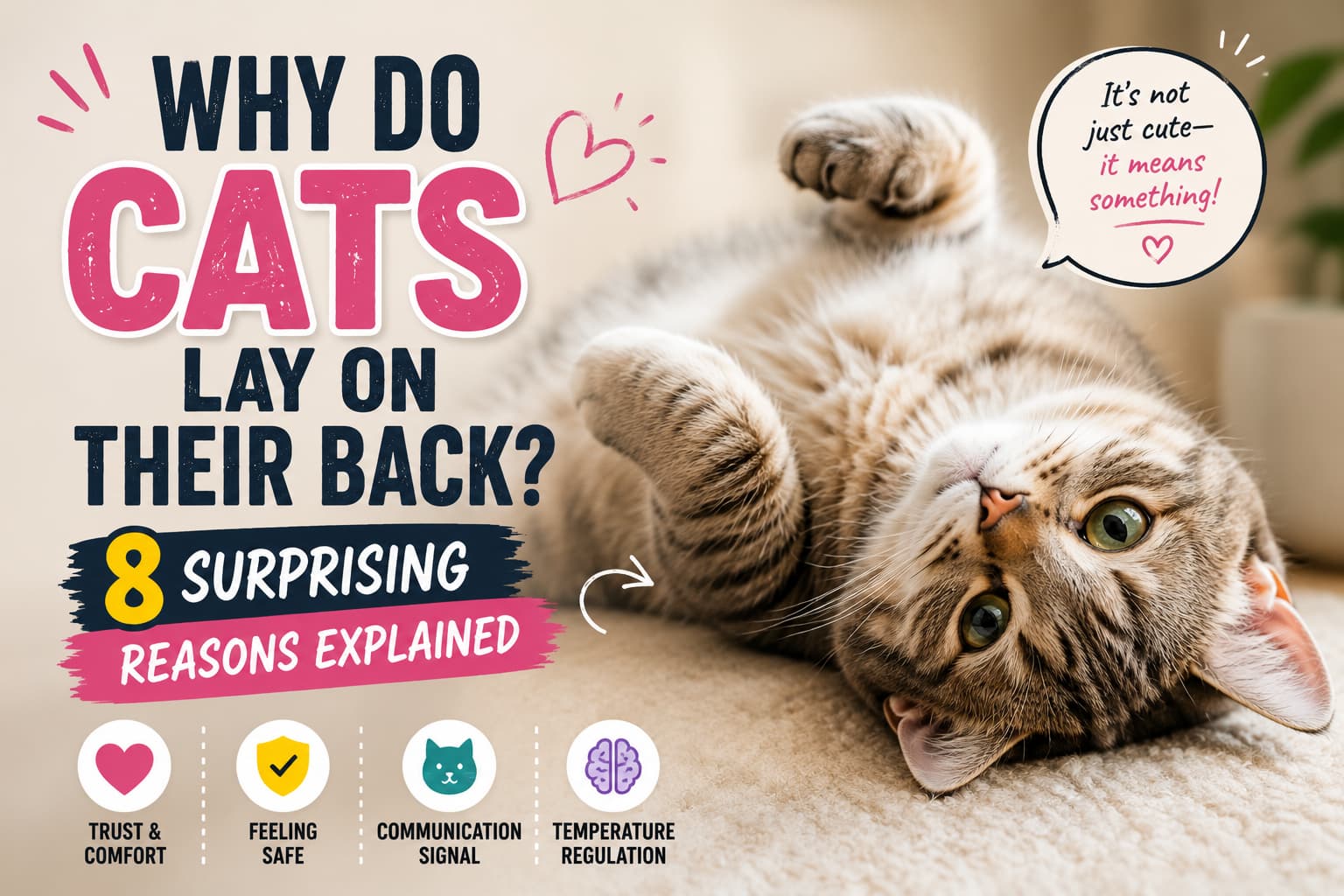
There are few things more disarming than a cat suddenly flopping onto its back and presenting its belly like an offering. Every cat owner knows the mix of emotions this produces: delight, followed by the instinct to touch it, followed — sometimes — by the swift reminder that the belly was not an invitation.
Why do cats lay on their back is a genuinely interesting behavioral question, because the answer changes entirely depending on the context. The same position can mean very different things, and knowing which you’re looking at changes how you should respond.
Why do cats lay on their back: 8 real reasons
1. The trust display — the most common reason
Exposing the belly is one of the most vulnerable positions a cat can be in. Their vital organs are exposed, and their ability to right themselves quickly is compromised. When a cat lays on their back in your presence, they are communicating that they feel safe enough to be vulnerable around you.
This is a genuine trust display — not necessarily an invitation for belly rubs, but an expression of security and comfort in their environment and with you.
2. Heat regulation
Cats have less fur on their belly than on their back and sides. Laying on their back exposes this less-insulated area to ambient air, helping them cool down. If your cat tends to lay on their back more in warm weather, or after vigorous play, heat regulation is likely the primary driver.
The choice of surface matters too — a cool tile floor combined with the belly-up position is a very efficient cooling strategy.
3. Play invitation — not a belly rub invitation
The belly-up position combined with dilated pupils, a twitching tail, and a playful, slightly unfocused expression is often a play invitation — not an invitation to be touched. The cat is positioning itself for interactive play: they can grab a toy (or your hand) with all four paws from this position.
This is the context that causes the “belly trap” — the owner reaches for the exposed belly, and all four clawed paws immediately engage. The cat wasn’t offering a belly rub; it was setting up for a wrestling match.
4. Comfort and contentment in a safe environment
A cat that routinely sleeps on their back — particularly in the middle of the room rather than tucked away — is a cat that feels deeply secure in its environment. The position requires full relaxation: muscles are loose, defenses are down.
This is a positive sign about your cat’s emotional state and their comfort level in the home. Cats that are anxious or in an insecure environment rarely sleep on their back.
5. Seeking attention and interaction
Some cats have learned that flopping onto their back gets a response from their owner — and that response is rewarding. If your cat makes eye contact, flops dramatically, and then watches you expectantly, they may be specifically soliciting your attention.
The position works well for this purpose because it’s difficult to ignore and reliably produces a human response. The cat has identified an effective attention-getting strategy.
6. Marking territory with scent
Cats have scent glands distributed across their body, including on their flanks and spine. Rolling and writhing on a surface while on their back is a form of scent marking — the cat is distributing their scent onto the surface. This is particularly common when a cat rolls in a specific spot repeatedly.
This behavior is more common in female cats in heat, but occurs in neutered cats as well as a general territorial behavior.
7. Post-meal or post-play relaxation
After eating, many cats lay on their back briefly as part of the relaxation response. The digestive process activates the parasympathetic nervous system — the “rest and digest” state — which promotes physical relaxation, including muscle loosening that allows the belly-up position.
Similarly, a cat that has just had an intensive play session and has caught and “killed” their toy may flop onto their back as part of the post-hunt relaxation sequence.
8. Female cats in heat
An unspayed female cat in heat often displays a specific posture that includes rolling on the back, writhing, and vocalizing. This is an instinctive reproductive behavior and is often accompanied by other heat signs: loud calling, increased affection, and rubbing against surfaces and people.
If your cat’s back-laying behavior is dramatic, sudden-onset, and accompanied by yowling and restlessness, heat cycle should be on the list — particularly if the cat is unspayed.
The belly rub question — should you or shouldn’t you?
This depends entirely on your individual cat. Some cats genuinely enjoy belly contact and will solicit it. Most cats, however, display the belly as a trust signal or play invitation — not a tactile request.
How to tell the difference:
- Belly rub welcoming: the cat is fully relaxed, kneading, purring, and doesn’t react when you slowly move a hand toward the belly
- Belly rub not welcoming: the cat’s eyes sharpen, the tail begins to flick, the paws orient toward your approaching hand
Test with a single slow, gentle touch first. The cat’s immediate response tells you everything.
The bottom line
Why do cats lay on their back most commonly comes down to trust, comfort, and relaxation — with context-specific variations for heat regulation, play invitation, attention-seeking, and marking behavior. The belly-up position is almost always a positive sign about your cat’s emotional state and security. Whether to engage with it depends on reading the accompanying signals correctly.
For more on understanding your cat’s behavior, see our complete cat behavior guide, cat body language guide, and why do cats knead. PetMD’s guide on How To Read a Cat’s Body Language is also an excellent reference.
Michael Burrows has owned cats his entire life and writes about feline behavior from personal experience and research. Educational content only.