Dog Proof Cat Feeding Station: The Complete Setup Guide for Multi-Pet Homes
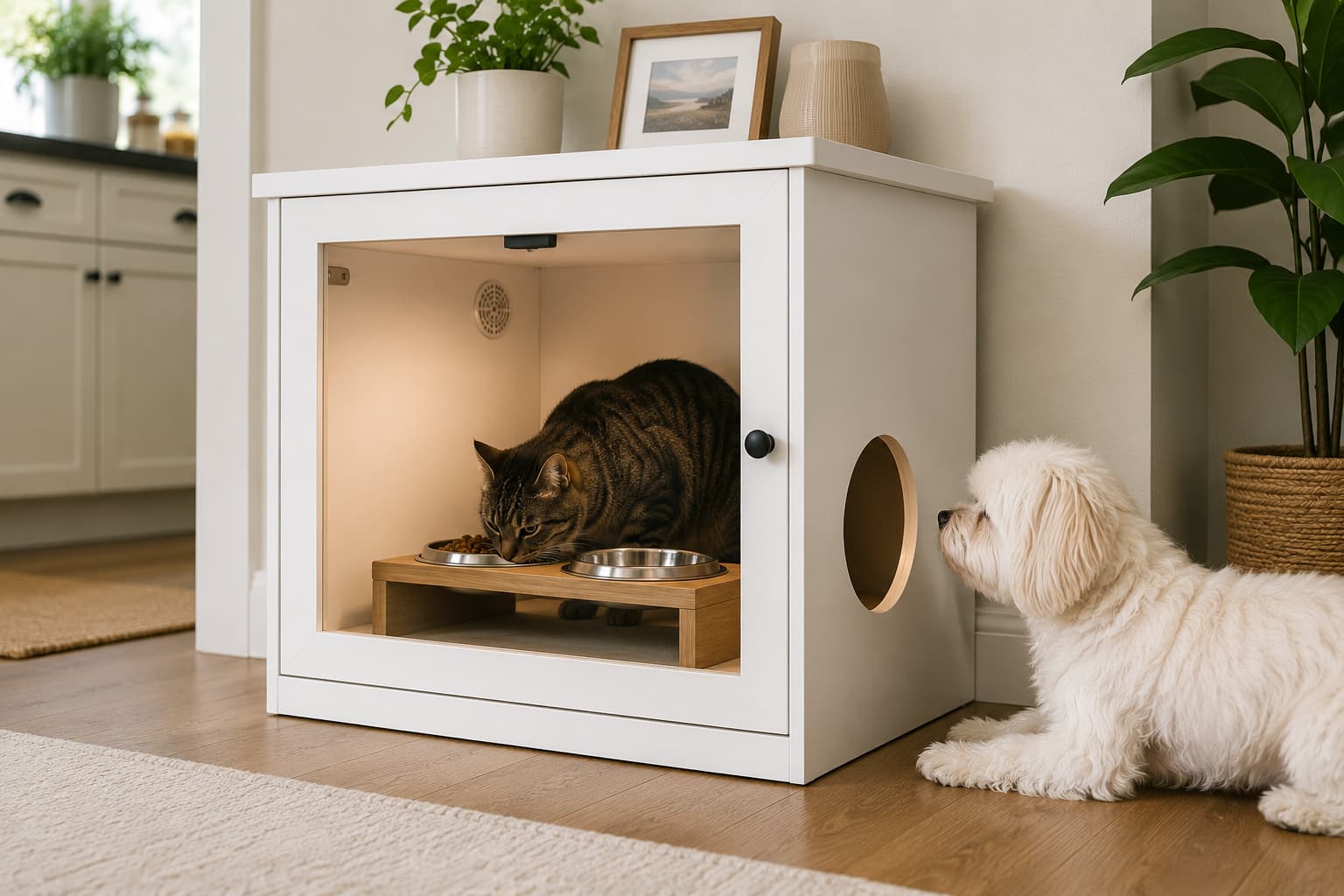
Table of Contents
When I first brought a dog into a home that already had two cats, the feeding situation became chaotic within the first 24 hours. The dog ate the cat food. One cat stress-ate. The other stopped eating entirely. It took a few weeks of trial and error to figure out a feeding arrangement that worked for everyone.
A dog proof cat feeding station is one of the most practical setups any multi-pet owner can implement — not just for convenience, but for the health and wellbeing of both species. Cat food is not appropriate for dogs (higher protein and fat content can cause digestive issues and pancreatitis over time), and dogs stealing cat food creates anxiety around feeding that affects cats’ eating habits and long-term health.
Why a dog proof cat feeding station matters
The issues with dogs eating cat food go beyond the immediate mess:
For the dog: Cat food is significantly higher in protein and fat than dog food. Regular consumption can contribute to obesity, pancreatitis, and gastrointestinal upset in dogs. It’s also specifically formulated without the balanced nutritional profile appropriate for dogs.
For the cat: Eating under the stress of dog presence, or competing for access to food, triggers anxiety that can affect appetite, digestion, and behavior. Cats are already prone to stress-related conditions (cystitis, over-grooming, litter box avoidance) — feeding stress is a meaningful contributor.
Practically: Dog-accessible cat food means constantly refilling the cat’s bowl and the dog consuming unintended calories.
Dog proof cat feeding station: 7 setup approaches ranked by effectiveness
1. Elevated feeding — most reliable, easiest to implement
The simplest and most universally effective solution. Place cat food on a surface the dog cannot reach — a counter, a shelf, the top of the washing machine, a purpose-built elevated cat feeder.
Works because: Cats are natural climbers; dogs (most breeds) are not. The feeding area becomes cat-exclusive without any training required.
Best for: Most dog and cat size combinations. The main exception is small dogs (Chihuahuas, toy breeds) that can access surprisingly low surfaces.
Height needed: At least 18–24 inches for small dogs, 36+ inches for medium to large dogs.
2. Baby gate with cat door — separates the spaces cleanly
Install a baby gate in the doorway to the room where cats are fed. Add a cat flap, a gap at the bottom large enough for cats to pass through, or a swing door specifically designed for pets.
Works because: Creates physical separation by room rather than by height. Very reliable for large dogs.
Best for: Homes with large dogs that can access elevated surfaces, or where the cats prefer to eat in a specific room.
Products: Pet gates with cat door built in (PetSafe Walk Through Pet Gate with Cat Door) are the cleanest solution.
3. Microchip-activated cat feeder — highest tech option
Smart feeders that only open when they detect the specific microchip or RFID collar tag of the registered cat. The dog (or a different cat) approaching the feeder triggers no response — only the correct cat opens it.
Works because: Completely foolproof regardless of dog size or athleticism.
Best for: Multi-cat homes where different cats need different foods, or where elevated feeding isn’t practical.
Products: SureFeed Microchip Pet Feeder, Closer Pets MiBowl.
Considerations: Higher cost (~$80–$150), requires battery power, cats need to learn to use it (most do within a week).
4. Small room with narrow-gap entrance
Modify a doorway, cabinet, or space with an opening large enough for the cat but too small for the dog. A gap of approximately 5–6 inches wide (or a cutout in a board mounted across the bottom of a doorway) allows cat access while excluding most dogs.
Works because: Passive solution requiring no training or technology.
Best for: Homes where a spare room, bathroom, or cabinet can be dedicated as the cat feeding area.
DIY options: Cut a cat-sized opening (approximately 6 inches x 6 inches) in a plywood board and mount it across the bottom of a doorway. Paint to match, add smooth edges.
5. Scheduled feeding — no free-choice food for dogs to access
Feed cats at specific mealtimes, supervise until eating is complete, and remove the bowl. No food left out means nothing for the dog to steal.
Works because: Eliminates the resource rather than protecting it.
Best for: Cats that eat well on scheduled feeding (most cats adapt). Not suitable for cats with medical conditions requiring continuous food access.
Benefit: Scheduled feeding also helps monitor each cat’s appetite — an important health indicator often missed with free-choice feeding.
6. Train “leave it” for the dog
A solid “leave it” command can make cat feeding areas off-limits through training. This works reliably when the owner is present and supervising.
Limitation: Not suitable as a standalone solution — dogs will eat cat food when unsupervised if no physical barrier exists.
Best as: A supplement to one of the above physical solutions, not a replacement.
7. Designated feeding room for cats with door closed
The most low-tech solution. Feed the cats in a room with a door the dog cannot open, close the door during feeding, and open it when the cats are done.
Works because: Physical separation, zero cost, perfectly reliable.
Best for: Homes where someone is always present during feeding. Doesn’t work for automatic feeders or free-choice feeding.
Recommended setup for most homes
For the average multi-pet home with medium to large dogs:
A baby gate with cat door or elevated feeding shelf handles 90% of situations at low cost. If different cats need different foods, a microchip feeder is worth the investment. Add scheduled feeding to eliminate food left accessible between meals.
Additional tips for multi-pet feeding success
- Feed each pet in a separate area regardless of whether dog-proofing is in place — cat-cat competition at the bowl causes stress too
- Ensure each cat has water access the dog cannot contaminate or monopolize
- Monitor each pet’s weight and appetite — changes are often the first sign of stress-related eating problems
- Keep the cat feeding area consistently in the same location — cats that don’t know where to find their food reliably develop anxiety around meals
For more on multi-pet homes, see our guides on why does my cat keep running away from me, complete cat behavior guide, and tips for adopting a dog from a shelter. The ASPCA cat care guide is also worth reading.
Michael Burrows has owned both dogs and cats and writes about multi-pet household management from personal experience and research. Educational content only.