Do Australian Shepherds Shed a Lot of Hair? The Complete Guide to Aussie Coat and Hair Management
The first time I visited a friend who had just gotten an Australian Shepherd, I noticed the lint roller sitting on the kitchen counter, next to the couch, and on the stairs. Three lint rollers. Strategically positioned. I asked about it. He just gestured around the room without saying anything. Three months with his Aussie had made words unnecessary.
Yes, Australian Shepherds shed. A lot. But here’s what most shedding guides don’t tell you: how much your specific Aussie sheds, when it’s worst, and what you can actually do about it varies significantly depending on coat type, health, season, and how you manage the grooming. This guide covers all of it — including how to tell when shedding crosses from normal into something that needs a vet’s attention.
This post is for educational purposes. If your Australian Shepherd is shedding abnormally — losing hair in patches, showing bald spots, or shedding alongside lethargy or skin changes — consult your veterinarian.
Why Australian Shepherds shed so much
The answer is in the coat. Aussies have a double coat — a soft, dense undercoat that provides insulation and a medium-length outer coat that’s slightly coarse and water-resistant. Both layers shed, but the undercoat is the main event. When the undercoat loosens, it doesn’t fall cleanly to the floor — it gets trapped in the outer coat and releases in waves, especially during brushing, play, or any vigorous movement.
This double-coat structure is what allowed the breed to work outdoors in variable temperatures — warm enough in winter, cool enough in summer (the undercoat actually insulates against heat as well as cold). It’s a genuinely functional coat. The tradeoff is that you’ll find Aussie hair in places that seem physically impossible.
The two types of Aussie shedding
Year-round shedding
Australian Shepherds shed moderately throughout the entire year. This is baseline — not a crisis, just the ongoing turnover of coat. Regular brushing two to three times per week manages this well for most owners.
Seasonal coat blowout (the real event)
Twice a year — typically spring and fall — the undercoat sheds heavily in what’s called “blowing coat.” During blowout, the volume of shed hair increases dramatically over a two to four week period. The undercoat comes out in clumps. You’ll find it on furniture, in food, on guests who visited for ten minutes, woven into your carpet in ways that defy vacuum cleaner physics.
Spring blowout is typically heavier — the dog is shedding the dense winter undercoat to prepare for warmer months. The fall blowout is usually slightly lighter as the summer coat releases to make room for winter regrowth.
Both are completely normal. Neither requires intervention beyond increased grooming frequency.
Mini Aussie vs Standard Aussie — does it make a difference?
Yes, and this is something almost no shedding guide addresses. Miniature Australian Shepherds (also called Mini Aussies or North American Shepherds) have the same double-coat structure as their standard-sized counterparts, but the smaller body means somewhat less total hair volume. The shedding pattern is identical — year-round moderate with two seasonal blowouts — but the sheer quantity is proportionally less.
If you’re debating between the two breeds partly for shedding reasons, the Mini Aussie is a meaningful reduction in overall hair volume, though not in grooming frequency. You’ll still need to brush two to three times per week and daily during blowout — there’s just less of it to manage.
The grooming toolkit you actually need
Vague advice like “use a deshedding tool” doesn’t help much when you’re standing in a pet store looking at thirty options. Here’s what to actually get and why:
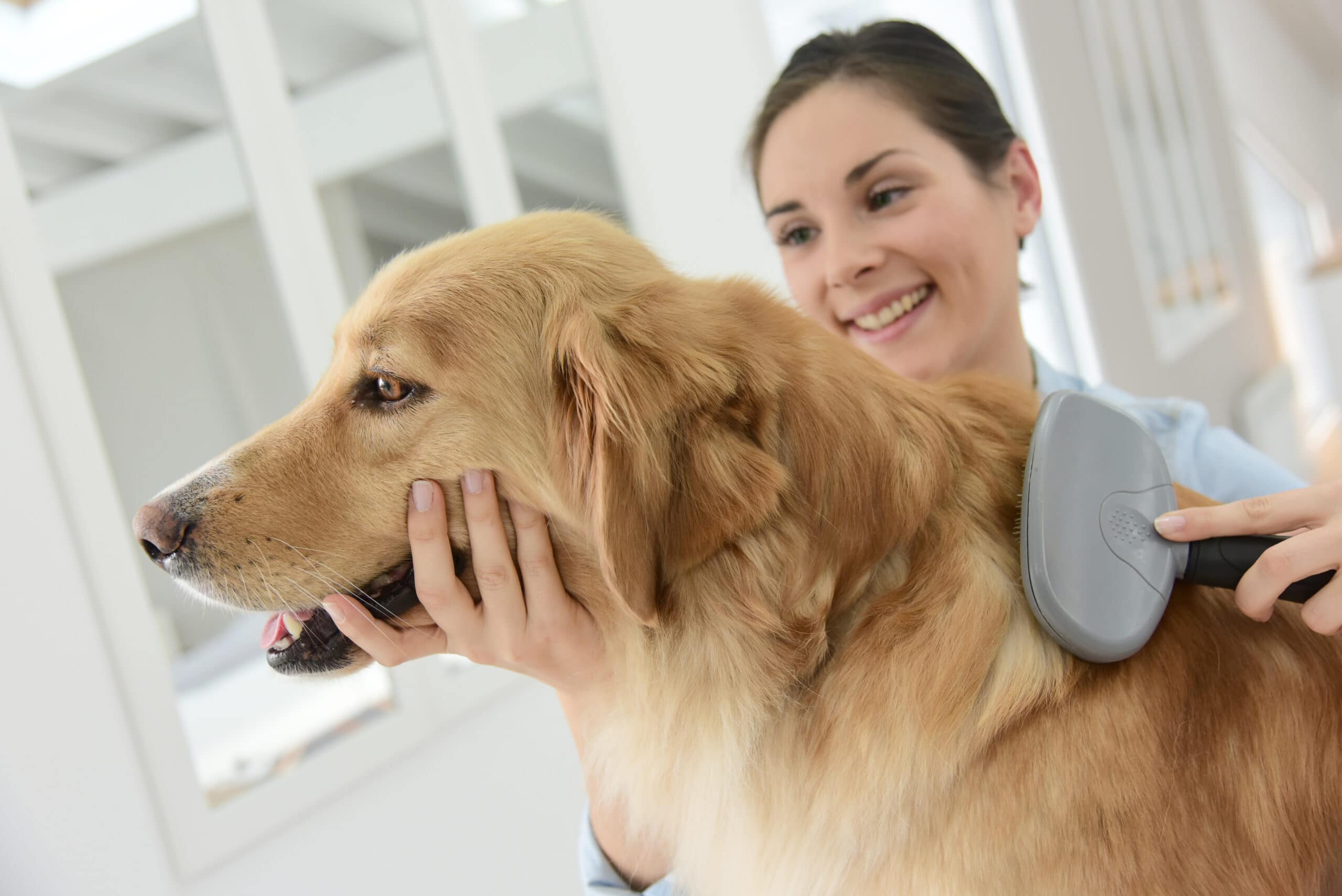
Slicker brush — your everyday tool. Use it first to work through the outer coat, remove debris, and loosen surface-level dead hair. Go section by section for best results. Good options include the Chris Christensen Mark IV or the Hertzko Self-Cleaning Slicker.
Undercoat rake — the tool that makes the real difference. It reaches through the outer coat into the undercoat and pulls out the loose, dead hair before it falls on your furniture. This is the tool that transforms blowout season from disaster to manageable. The Furminator Undercoat Deshedding Tool and the Safari De-Shedding Comb are both solid choices.
Dematting comb — for behind the ears, around the collar area, and the backs of the legs where mats form fastest. A few minutes with this during each grooming session prevents tangles from becoming larger problems.
Deshedding shampoo — used during baths, these shampoos (look for ones containing omega fatty acids and vitamin E) help loosen the undercoat and reduce post-bath shedding. Not magic, but genuinely useful during blowout season.
Grooming sequence that works: slicker brush → undercoat rake → dematting comb on problem areas. Do this in the same spot every time (outdoors is ideal) so the hair is contained.
Grooming frequency — what actually works
| Period | Frequency | Tools |
|---|---|---|
| Year-round baseline | 2–3x per week | Slicker brush + undercoat rake |
| Blowout season (spring/fall) | Daily or every other day | Full toolkit |
| After outdoor exercise (mud, burrs) | As needed | Slicker brush |
| Full bath | Every 4–6 weeks | Deshedding shampoo |
Bathing more than once a month strips the natural oils from the coat and counterproductively makes shedding worse over time — the skin dries out and the coat becomes more fragile. During blowout, a bath followed by a thorough blow-dry (warm, not hot) and immediate brushing is the most effective single-session hair management approach. It opens the coat, loosens the undercoat, and allows you to remove an enormous amount of dead hair in one go.
Managing Aussie hair in your home
This is the practical section competitors always skip — because the grooming is only half the battle. Here’s what actually works room by room:
Furniture: A rubber bristle brush or damp rubber glove lifts embedded Aussie hair from upholstery more effectively than tape rollers. Throw blankets on frequently used furniture during blowout season — wash them weekly rather than deep-cleaning the couch constantly.
Hard floors: A microfibre dust mop beats a vacuum for daily hair pickup on hardwood and tile — it captures the hair rather than pushing it around. Save the vacuum for weekly deep cleaning.
Carpet: A rubber-bristled carpet rake before vacuuming pulls up embedded hair the vacuum alone can’t reach. During blowout, do this before every vacuuming session.
Car: Line the back seat with a fitted waterproof seat cover with a non-slip base. Rubber pet hair removal brushes work well on car upholstery. Accept that the car will have some hair and that this is the price of having an excellent adventure companion.
Clothes: A good lint roller for emergencies, but better long-term: store clothes in a closed wardrobe and avoid dressing in dark colours immediately before interacting with the dog. A damp rubber glove run over clothing removes embedded hair faster than tape.
Air quality: During heavy blowout, a HEPA air purifier in the main living area meaningfully reduces airborne dander and fine hair particles — especially relevant for household members with mild allergies.
Should you shave an Australian Shepherd?
No — and this is important enough to state clearly. Shaving a double-coated dog does not reduce shedding. The undercoat grows back faster than the outer coat, often emerging damaged and coarser. The resulting coat is harder to manage, provides less effective temperature regulation (the double coat insulates against both heat and cold), and can develop a condition called “coat funk” or post-clipping alopecia in some dogs where the coat never fully recovers.
The temptation during blowout season is understandable. The correct response is more frequent brushing, not a shave.
The one exception: if a veterinarian recommends shaving for a medical reason (wound care, severe skin condition), that’s a different situation. Aesthetic shaving is what should be avoided.
Normal shedding vs abnormal shedding — when to see a vet
This distinction matters and most guides handle it poorly. Here’s how to tell the difference:
Normal shedding looks like:
- Consistent, even hair loss across the body
- Heavier in spring and fall, lighter the rest of the year
- Coat remains full and healthy-looking between sheds
- No changes in behavior, appetite, or energy
Abnormal shedding looks like:
- Bald patches or thinning in specific areas
- Hair coming out in large clumps outside of blowout season
- Skin changes — redness, scaling, crusting, or unusual odor
- Excessive scratching or licking accompanying the shedding
- Shedding alongside lethargy, weight change, or appetite loss
Common medical causes of abnormal shedding in Aussies:
Hypothyroidism — the thyroid produces insufficient hormone, which directly affects coat quality and shedding volume. Symptoms include weight gain, lethargy, and a dull, thinning coat. Diagnosable with a simple blood test and manageable with daily medication.
Allergies — environmental (pollen, dust mites, mold) or food allergies can cause skin irritation and associated hair loss. Look for scratching, red skin, and recurring ear infections alongside the shedding.
Stress and anxiety — significant stress (new home, new pet, schedule disruption) can trigger a coat blowout outside of normal seasonal timing.
Parasites — fleas, mites, or mange cause localized or widespread hair loss with visible skin irritation. A vet can identify these quickly.
Hormonal changes in females — unspayed females shed more heavily during and after heat cycles. Pregnancy and post-partum periods also increase shedding significantly.
If you see any of the abnormal signs listed above, a vet visit is the right first step — don’t try to manage your way through unusual shedding with grooming alone.
Diet’s role in coat health
What goes into the dog significantly affects what comes off it. An Aussie on a low-quality diet with insufficient protein and fat will have a dull, fragile coat that sheds more than necessary.
What actually makes a measurable difference:
- High-quality protein as the first ingredient in kibble — chicken, salmon, turkey, or beef
- Omega-3 fatty acids — either through a fish-based diet or a daily fish oil supplement (roughly 1000mg per 10lbs of body weight, though check with your vet for your dog’s specific needs)
- Omega-6 fatty acids — found in most quality dog foods, support skin barrier function
- Adequate hydration — dehydration affects skin and coat quality; ensure fresh water is always available
Supplements marketed specifically for coat health (biotin, zinc, vitamin E) can help in deficient dogs but won’t dramatically change shedding in a dog already on a good diet. Fix the food first, supplement second.
The honest pre-adoption reality check
If you’re researching this before getting an Aussie, here’s what to actually prepare for:
You will find Aussie hair in your food, on your guests, inside sealed containers, and in locations that require creative explanation. During blowout season, you will fill grocery bags with loose undercoat during single brushing sessions. Every dark piece of clothing you own will become a display surface.
None of this is a reason not to get the breed — Aussies are extraordinary dogs, and the people who own them are almost universally devoted to them. But the shedding is real, it’s year-round, and it’s heavier than most first-time double-coat owners expect. Go in knowing that, invest in the right tools, build the grooming habit from day one, and the hair becomes a manageable part of owning one of the best breeds there is.
For more on the Aussie, see our guides on are Australian Shepherds aggressive and our main Australian Shepherd breed guide. The AKC’s Australian Shepherd breed page has excellent information on breed standards and health.
Michael Burrows has owned dogs for over 15 years and writes about dog care, grooming, and breed characteristics from personal experience and research. This content is educational and does not replace veterinary advice.